


From Brooklyn to Hollywood, Biography of Gene Tierney.
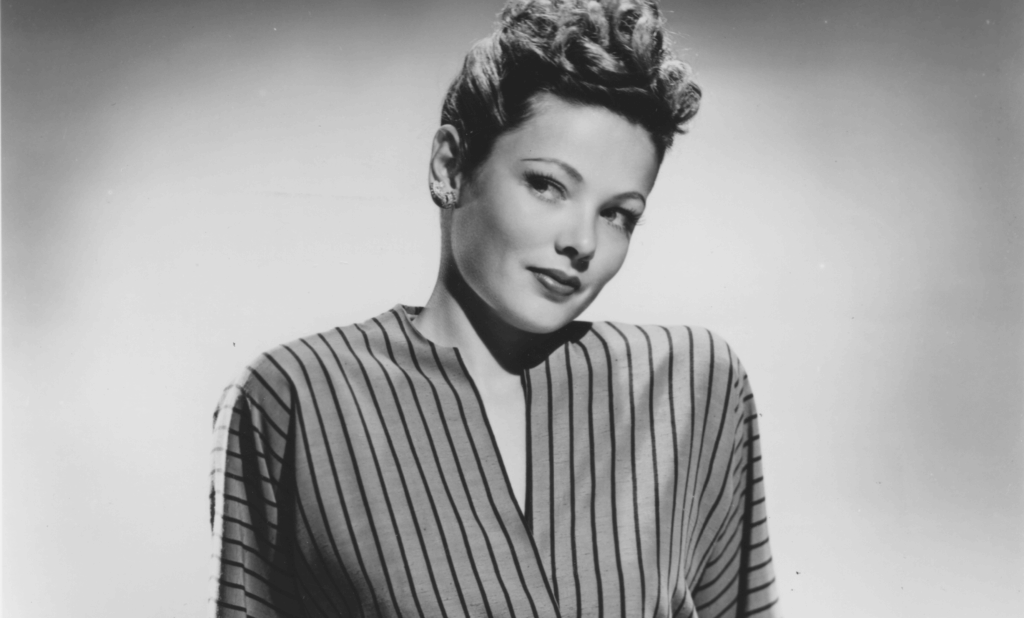
Gene Tierney, the epitome of Hollywood elegance, was born on November 19, 1920 in Brooklyn, New York, into a family of American society. From the moment she took her first steps, she attracted attention with her singular green eyes and a charm that made her a standout at the salons her parents took her to. Of Irish descent, Gene received a refined education, marked by courses at renowned private schools. Her parents, Howard Sherwood Tierney, a stockbroker, and Belle Lavinia Taylor, a schoolteacher, provided a comfortable environment that nurtured her taste for the arts and European culture.
Childhood & beginnings
1920
Gene Tierney was born in 1920 in Brooklyn, New York. She enjoyed a refined, private upbringing. Gene Tierney was not destined to become an actress: her parents imagined a sheltered future for her, far from the spotlight. But her encounter with the theater proved decisive. On her return from studies in Europe, she decided to go into the dramatic arts. Her father, reluctant at first, eventually agreed, and Gene enrolled in drama classes.
1938
Stayed in Lausanne, perfected his French and opened up to Europe, making his theatrical debut on Broadway (1938).
By 1938, she was performing on Broadway. She debuted in What a Life! followed by The Male Animal and Mrs. O’Brien Entertains. Her already legendary beauty, but above all her magnetism, immediately caught the attention of critics and New York audiences. Newspapers of the time wrote that “a new star was born, combining aristocratic elegance and dramatic intensity”. Her career seemed well and truly mapped out.
“She had a sculptural beauty, but a warmth in her eyes that made her unforgettable on stage.” – Broadway review, 1939.
The ascent to Hollywood
1940
Film debut: The Return of Frank James (1940).
Thanks to rave reviews, Gene attracts the attention of 20th Century Fox. Studio head Darryl F. Zanuck saw her as a future star. She signed a contract and took her first steps in front of the camera in Fritz Lang’s The Return of Frank James (1940), alongside Henry Fonda. Although her role was secondary, her magnetic presence was noticed.
On the advice of the studios, Gene adopted tobacco to give more depth and gravity to her voice, considered too soft. A harmless gesture at the time, it became a habit she never managed to break.
1941 & 1944
Revelation: The Shanghai Gesture (1941).
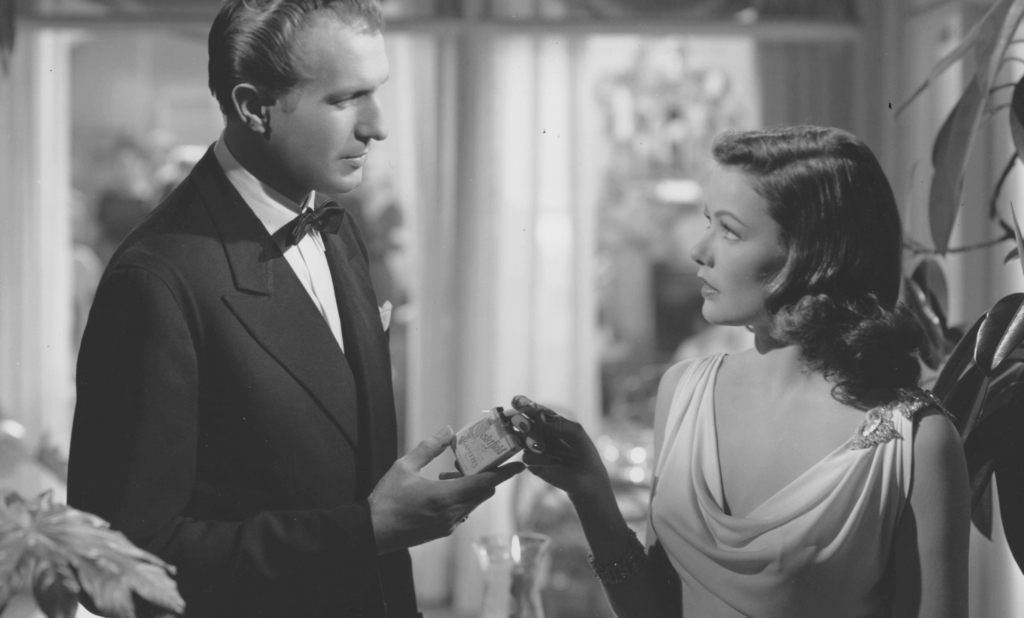
The breakthrough: Laura (1944).
In 1941, she made a name for herself in The Shanghai Gesture, where her exotic allure fascinated audiences. But it was Laura (1944) that elevated her to mythic status: directed by Otto Preminger, she played Laura Hunt, a woman idealized by all, whose painted portrait haunts the characters and the viewer. The film became one of the pinnacles of film noir, and Gene Tierney became its inseparable icon.
1945
Oscar nomination for Leave Her to Heaven (1945).
In 1945, she made her breakthrough with Leave Her to Heaven. Her portrayal of Ellen, a sickly jealous, icy and magnetic woman, earned her an Oscar nomination for Best Actress. Critics praised her performance as both beautiful and terrifying, and many still consider Gene Tierney to be one of classic cinema’s greatest femme fatale incarnations.
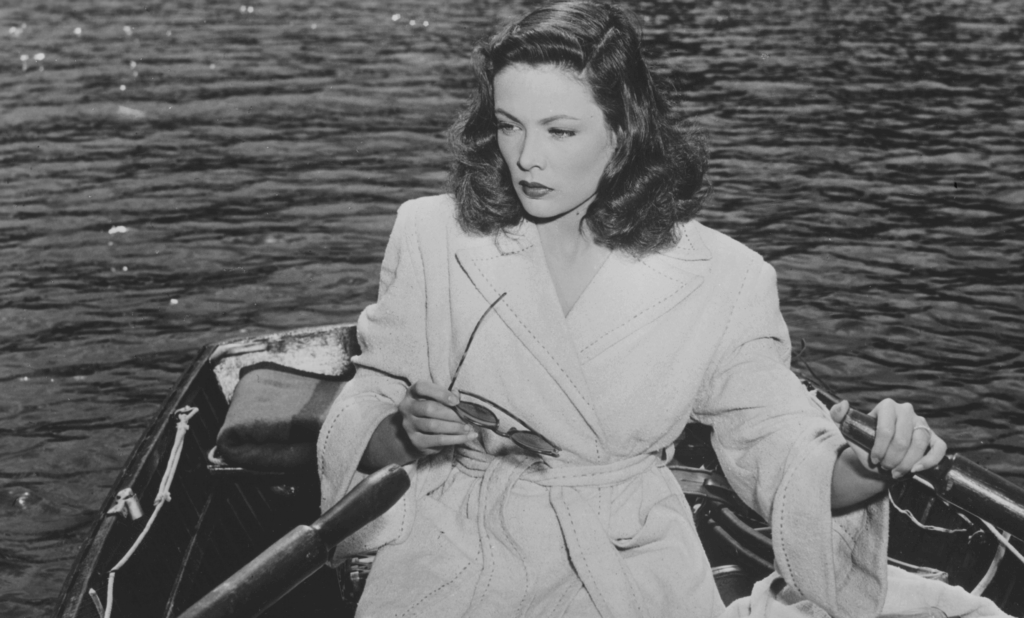
“In Laura, Gene Tierney is more than an actress: she is an apparition.” – Otto Preminger.
Personal life and drama
Her father, Howard Sherwood Tierney, played an active role in her early career, becoming her first agent. He set up a company to manage her income, but Gene would later discover that he had embezzled a significant portion of her earnings, leaving her betrayed and financially weakened.
1941
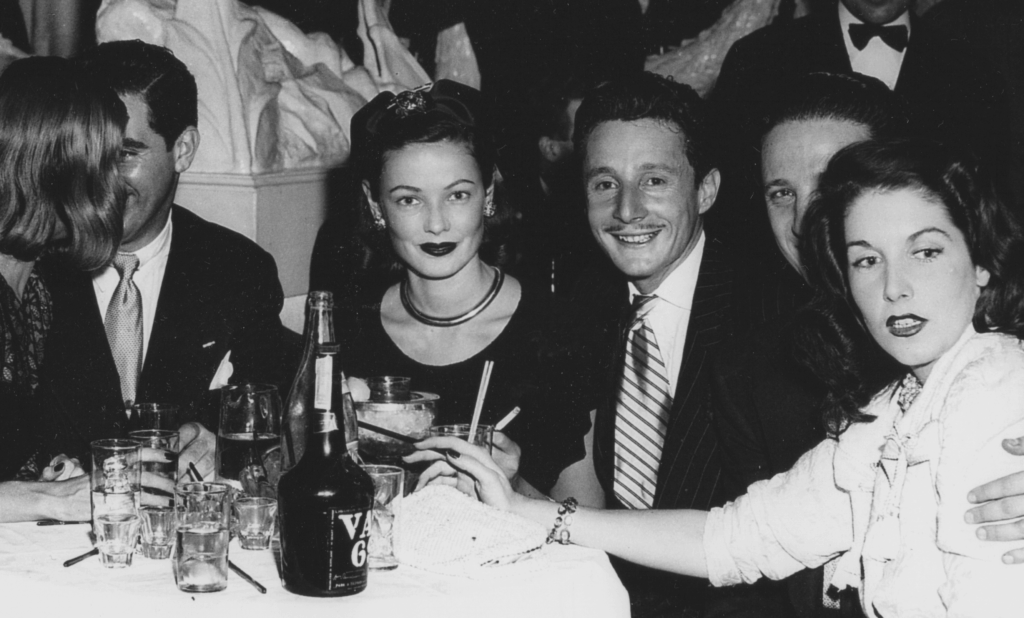
Marriage to Oleg Cassini in 1941.
Parallel to her rise to fame, Gene’s private life took turns worthy of a novel. In 1941, she married Russian-born couturier Oleg Cassini, who became both her husband and her resident fashion designer. Together, they formed one of Hollywood’s most glamorous and modern couples. They had two daughters: Daria in 1943 and Christina in 1948.
1943
Birth of Daria (1943), severely handicapped. But fate struck cruelly. At a charity event at the Hollywood Canteen, Gene met an admirer who, despite recovering from rubella, insisted on kissing him. A few months pregnant, Gene contracts the disease. Her daughter Daria is born prematurely, severely handicapped. This tragedy broke the actress’ heart and marked her whole life. In her autobiography, she writes bitterly: “I paid the price of my fame by giving birth to a child condemned to suffer.” Her peculiar story also inspired a novel by Agatha Christie, The Mirror Crack’d from Side to Side (1962).
1952
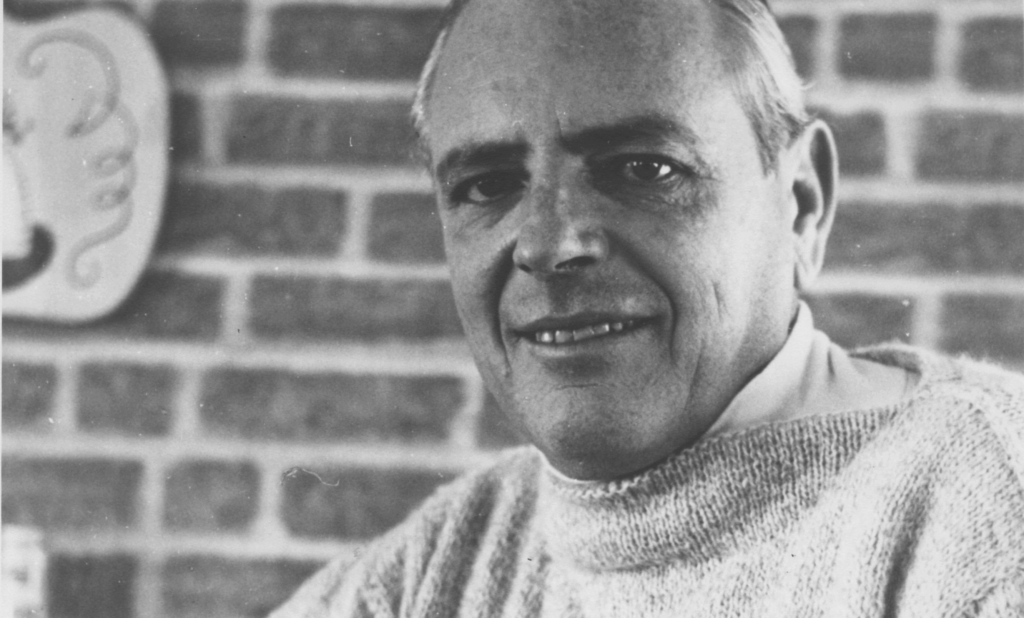
Divorce in 1952, second marriage in 1960 to Howard Lee.
Despite this tragedy, Gene continued her career. She had a passionate but short-lived romance with John F. Kennedy, who ultimately chose his political career over their union. Later, she had a high-profile affair with Prince Aly Khan. After her divorce from Oleg Cassini in 1952, she finally found lasting stability with Texas oil magnate Howard Lee, whom she married in 1960.
“She bore her wounds with a dignity that commanded respect.”
– Oleg Cassini.
Decline and retreat
Her father, Howard Sherwood Tierney, played an active role in her early career, becoming her first agent. He set up a company to manage her income, but Gene would later discover that he had embezzled a significant portion of her earnings, leaving her betrayed and financially weakened.
1950
Depression and schizophrenia in the 1950s.
The 1950s cast a shadow over her career. Weakened by her personal trials and inner suffering, Gene fell into depression. She was diagnosed with schizophrenia and hospitalized several times.
1957
Suicide attempt in 1957.
Stabilization thanks to the Menninger Clinic.
The brutal psychiatric treatments of the time included electroshock therapy and prolonged stays in clinics. In 1957, she attempted suicide, an episode that revealed just how close to the abyss she was.
It was at the Menninger Clinic, under the supervision of Dr Karl Menninger, that she gradually managed to stabilize her condition.
1962
Last notable role: Storm in Washington (1962).
The love and support of her second husband, Howard Lee, offered her refuge and emotional security. From then on, she gradually withdrew from the screen, preferring the peace of a private life to the hustle and bustle of Hollywood. Her last major role was in Tempête à Washington (1962).
1991
Gene Tierney dies in Houston.
“She was one of the most beautiful women in the world, but also one of the bravest.”
– Howard Lee.
Cigarettes, end of life and legacy
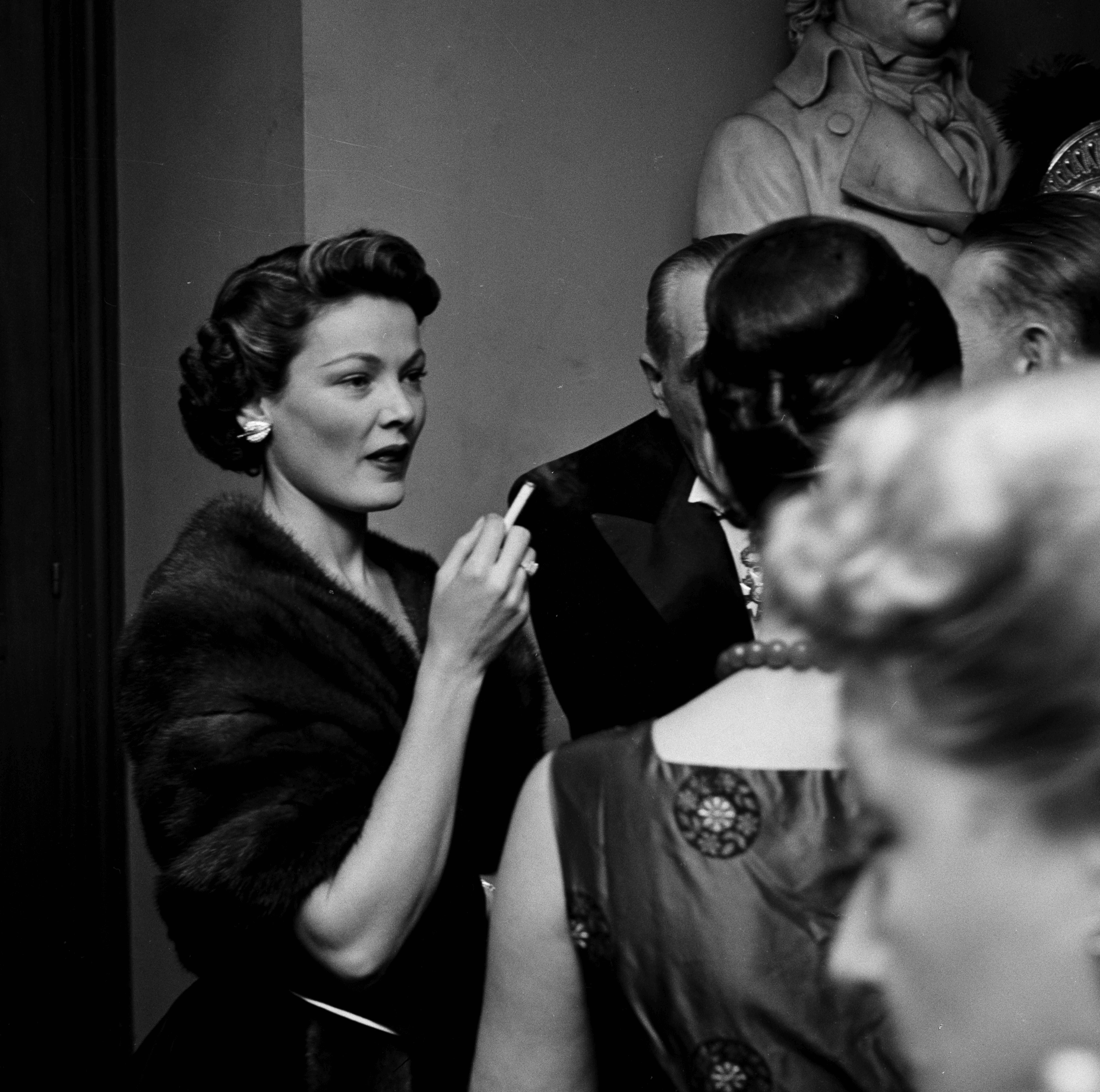
From her early days in Hollywood, producers found Gene Tierney to be stunningly beautiful, but her voice too soft, almost too soft for the roles of tragic heroine or femme fatale she was destined to play. At a time when people were unscrupulously correcting physiques and attitudes, one recurring piece of advice was to smoke to lower and slightly hoarse her tone. Gene, anxious to please the studios and make a name for herself, took up smoking – a common gesture for actresses of her time, but one that was to become a tenacious addiction for her.
Cigarettes soon became an integral part of her image: she was seen on the set, between takes, elegantly posing with a thin cigarette held in her fingertips. This gesture added to the mystery and magnetism of her characters, reinforcing the icy, sophisticated silhouette that had made her an icon of film noir.
Gene never managed to free herself from cigarettes. What began as a professional trick to enrich her voice became a deadly addiction. In the 1980s, she was diagnosed with lung cancer. On November 6, 1991, Gene Tierney died in Houston at the age of 70. Her death, due to complications from cancer, marked the end of a life of glory and pain, in which Hollywood glamour left, as it often does, a deadly imprint.
CONTINUE EXPLORING THE LIFE OF AN ICON